All you want is insurance…why is it so hard to choose?
Let’s take a look at the different types of home insurance policies to narrow down your options.
When people talk about “home insurance” they often make it sound like a simple policy. But there are actually several types of home insurance policies, and the right one depends on what kind of home you live in, how you use it, and what kind of coverage is available to you.
This does not mean that you have to memorize every insurance form that exists. (Please don’t!) But it helps to understand the basics before choosing a policy, especially if you live in Florida.
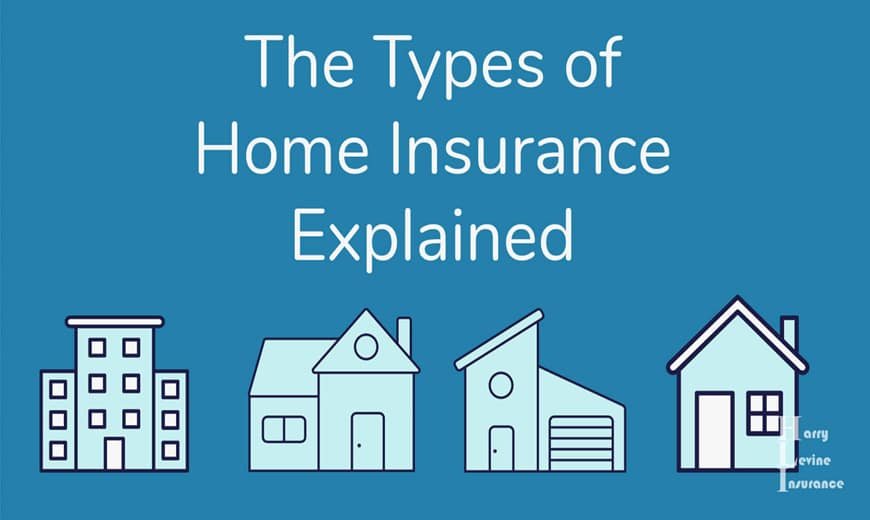
In this article, we’ll look at the eight main types of home insurance policies, what they typically cover, and how to start narrowing down the right option for your home.
The reality is that there are multiple types of homeowners insurance, each with its own set of coverages and exclusions.
Here’s the quick version:
- HO1 (“basic form”) – This is the most basic home insurance policy available, covering only losses caused by 10 perils: fire, lightning, storm/hail, explosion, riot or civil commotion, falling objects (such as trees), vehicles, smoke, vandalism and theft.
- HO2 (“wide form”) – HO2 policies are similar to HO1 in that they only cover losses caused by perils specifically mentioned in the policy. The difference is that the HO2 covers a total of 16 – 10 covered by the HO1 policy, as well as the weight of ice, snow or slush; accidental overflow of water or stream; freezing; sudden electric shocks; sudden tearing, burning, cracking or blowing of electrical appliances; and volcanic eruption.
- HO3 (“special form”) – The most common home insurance policy, the HO3, is known as an “all risks” policy because it provides cover against all risks except those specifically excluded in the policy. However, personal belongings are only protected against the specified risks.
- HO4 (“broad form of content”) – Also known as renter’s insurance, this policy covers 16 specified perils for personal property only. The building itself is insured by the property owner.
- HO5 (“exhaustive form”) – HO5 policies are similar to HO3 policies. Both offer “whole risk” coverage for the structure, but HO5 policies also offer coverage for all risks to personal property.
- HO6 (“Unit Owners Form”) – Commonly referred to as condo insurance, this policy offers “wall coverage” against 16 specified perils.
- HO7 (“mobile home form”) – This type of home insurance policy is specifically designed for small homes, mobile homes and trailers.
- HO8 (“modified form of coating”) – HO8 policies can be particularly useful for older homes that do not qualify for an HO3 policy. Covers 10 perils, with reimbursement of actual cash value, not replacement costs.
If you’ve only recently become a Florida resident, you may be surprised by what your homeowners insurance covers. Almost every carrier has an endorsement titled something like “Florida Special Modifications” that narrows the scope of coverage compared to the national standard. These approvals often apply to properties outside the storm hazard, such as fences, antennas, satellite dishes and similar items.

Which home insurance to choose?
Although there are eight types of coverage, your choices are often limited by the type of home you own and what’s available on the market.
For example, renters and apartment owners would buy HO4 or HO6 policy, resp. Similarly, mobile homes can be covered by an HO7.
For single-family homes, you have a little more choice.
Although rare, there are some Florida carriers that sell HO1 and HO2 policies. Our advice? Stay away! These are sometimes marketed as “Primary Choice” policies, but offer far less coverage than is safe.
HO8 policies are best for older or historic homes that would be difficult or impossible to restore exactly as they were, as certain materials may simply not be available anymore. Rather than insuring the home at replacement value (the cost of restoring the home exactly as it was), HO8 policies will reimburse at an agreed value.
For single-family homes (not on the National Historic Register!), the choice is between HO3 and HO5.
If you live in Florida, you may have a hard time finding a carrier that offers an HO5 policy, but they do exist! If the extra protection is worth it to you, discuss your options with your independent insurance agent so they can point you in the right direction.
What does policy HO3 cover?
For many homeowners, the HO3 policy is the most likely to come across. That’s why it deserves a closer look.
The standard HO3 policy offers:
- Residential coverage for the physical structure of your home;
- Other structures (such as a shed or detached garage);
- Personal property coverage;
- Additional living expenses you may incur if your home becomes temporarily uninhabitable;
- Personal liability coverage (for injuries to a third party for which you are responsible);
- Medical payments for third party injuries for which you are not responsible.
Just because you’re limited to an HO3 doesn’t mean you have no choice when it comes to your home insurance coverage. Most carriers offer multiple options for coverage limits, deductibles, and endorsements.

HO3 vs HO5: What’s the difference?
At first glance, the HO3 and HO5 policies appear almost identical. But there is a key difference between the two, and it all comes down to how they handle personal property.
Both HO3 and HO5 policies provide ‘all risks’ cover, meaning they provide protection against any risk not specifically excluded in your policy. But in the HO3 policy, this ‘all risks’ protection only applies to damage to your home, not to your personal belongings. Your personal property under an HO3 policy is only covered for specified perils.
The HO5 policy extends this protection by offering full risk cover for personal property as well. This can be valuable if you want broader protection for your belongings, but availability can vary, especially in Florida.
So is HO5 always better? It is not mandatory. It depends on your needs, your risk and your budget.
What about condo, renters, mobile home and old home insurance?
Not everyone looking for home insurance owns a single-family home. That’s why there are multiple types of home insurance!
If you’re renting your home or apartment, you’re usually looking for an HO4 policy, better known as renter’s insurance, to cover your personal belongings (which aren’t covered by your landlord’s policy).
If you own an apartment, you’re usually looking for an HO6 policy. Condo insurance is often described as “insurance” because it is designed around the parts of the unit that you are responsible for.
If you own a mobile home, tiny home or trailer, you may need an HO7 policy designed for that type of home.
If you own an older home, especially one with unique construction or materials, you may want to consider an HO8 policy. Older homes can present coverage challenges because restoring them exactly as they were may not be realistic.
This is where it helps to slow down and ask questions before you buy. The type of building you live in has a big impact on the type of policy you need.
What if you run a home business?
Home insurance is designed to protect your personal property and home. It is not intended to cover your business.
This matters if you run a home business, even if the business seems small. Selling handmade products online, storing inventory in a spare room, meeting with clients at home, storing business equipment at home, or using your vehicle for business tasks can all create coverage issues.
Business property, business-related liability, lost business income, product-related claims, and cyber risks are not what a homeowners policy should cover.
So if you run any business from home, tell your insurance agent exactly what you do. The goal is not to guess what policy you need. The goal is to make sure your agent understands how the home is being used so they can help you identify the right coverage before there’s a claim.
Optional coatings
In our professional opinion, there are very few cases where a standard homeowners policy is adequate coverage. Fortunately, there are a variety of riders (or secondary policies) to choose from to help you create the perfect safety net.

Some optional coverages we often see:
This is by no means a complete list of every supplemental policy on the market. There are hundreds of insurance coverages that protect against all kinds of risks.
Talk to an independent agent before you choose
The insurance market can be confusing and overwhelming if you don’t have access to the right resources.
As a second generation insurance agency, insurance is literally in our blood. Our agents have extensive knowledge of the types of auto, life, business and home insurance policies available and know how to help you find a policy that fits your budget and your individual needs.
The right home insurance isn’t always the cheapest. It’s the one that fits your home, your belongings, your risks and the way you actually live.
If you’re trying to decide between different types of home insurance policies, Harry Levine Insurance can help you sort through your options and ask the right questions before you buy.
Call today to see how we can help!