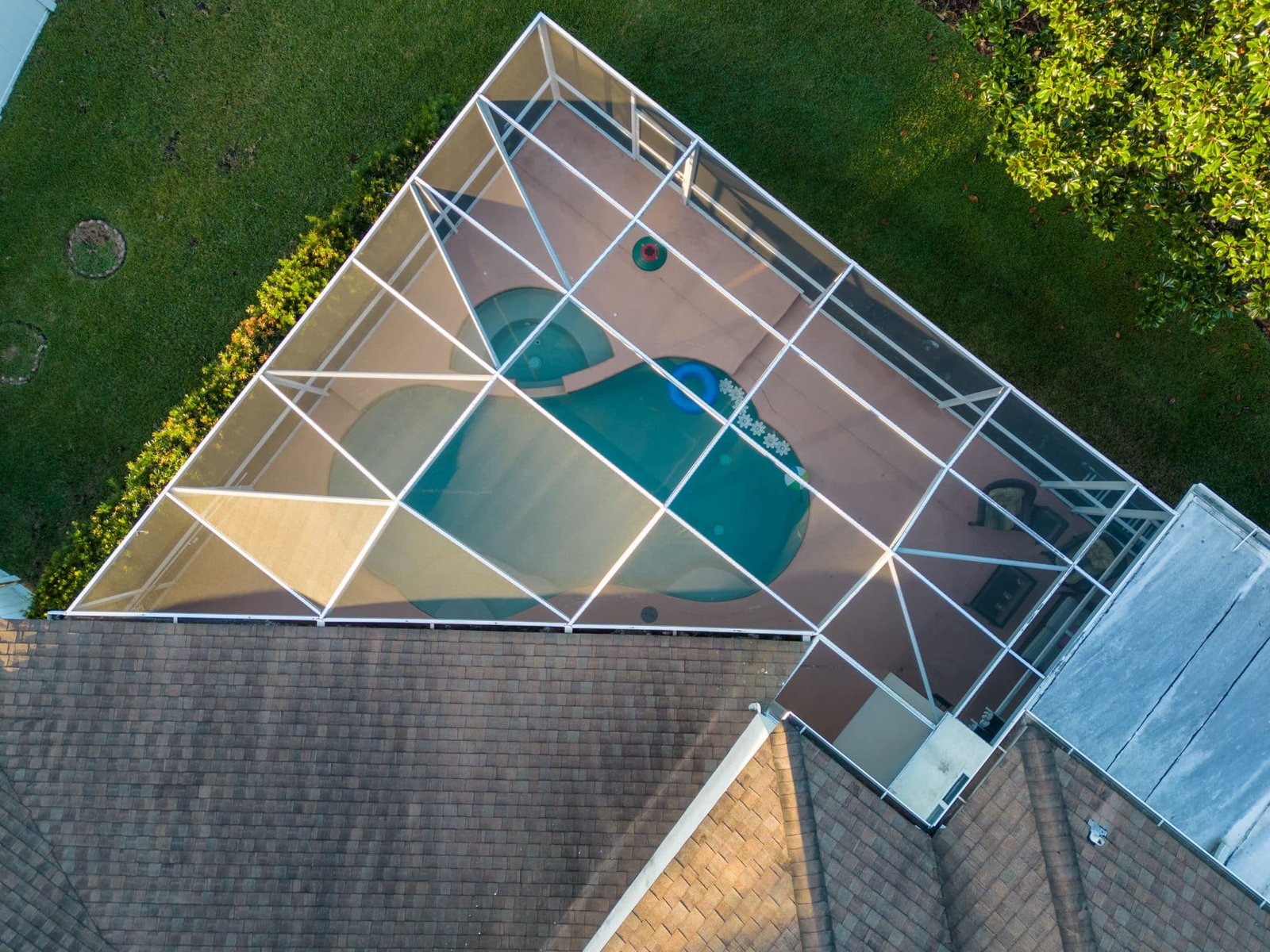
Pool cages are common in Florida, but the coverage can be surprisingly specific.
Here’s how to confirm if your pool cage is covered by insurance before you need it.
If you’re a Florida homeowner, there’s a good chance your backyard includes a screened enclosure (often called a pool cage). It protects against insects, makes the patio more usable and feels like a natural extension of the house.
The tricky part is that insurance doesn’t always treat a pool cage as “part of the house.” So are pool cages covered by insurance? It depends on your specific homeowners policy and in many cases it depends on whether you have a screen box (add-on) endorsement and what that endorsement actually covers.
Are the pool cages insured?
Some home insurance companies do not provide any screen coverage. Others cover the aluminum frame but not the screen. And many carriers treat it as a special add-on, meaning it may not be covered unless you see it in your policy documents.
In other words: if it doesn’t show up on your declarations page, it might not be there when you need it.
Most of them home owners insurance policies divide property coverage into buckets (ie the house itself vs. other structures), and then endorsements can change what’s included and what’s limited.
Attached vs. detached
One common detail that changes how coverage is applied is whether the pool cage is considered attached to the home or treated as a separate structure. This is one reason why two neighbors have two different answers, even with similar homes.
Your goal is not to guess which category your pool cage “should” fall into. Your goal is to find out how your policy actually classifies it.
Confirmations and special restrictions
In Florida, it is common to use policies approvals to add, remove or limit certain types of coverage.
Handy tip: pull up your declarations page and look for wording like ‘screen enclosure’, ‘pool cage’ or ‘carport’.

What is covered?
Sometimes homeowner’s insurance companies will offer screen coverage, but only for the actual cage or aluminum frame – not the screen material itself.
If you only have frame coverage, you may still be paying out of pocket for the screens. If you’re not sure what you have, this is a great question for an agent.
Even when something is “covered,” insurance usually means coverage for specific causes of loss (often called dangers). Florida homeowners also face added complexity around windstorms and named storms, and approvals can change how (or whether) a screen is handled.
That’s why it’s not enough to hear, “Yes, you have pool cage coverage.” You also want to ask, “Coverage for what?”
How much screen housing coverage do I need?
Just as with any type of property coverage, homeowners should purchase enough coverage to replace their pool cage if it is completely destroyed.
This means you’re aiming for a replacement value that reflects what it would cost to restore your enclosure today, not what you paid years ago, not a rough guess.
Two simple ways to get a realistic number:
- Check your original purchase documentation (invoice/contract) for the box and note the size and specifications.
- Get an estimate from a licensed contractor. This can take the guesswork out of the number, especially if construction costs have changed since the enclosure was built.
If you’ve upgraded the enclosure (larger footprint, different materials, added doors, etc.), make sure the estimate reflects what you actually have now.

When to call your agent
Screen cover is often a special add-on, so if it doesn’t appear on your policy, you should ask your agent about your specific needs and the details of your specific policy.
Here are the most helpful questions you can ask:
- Does my policy cover my pool cage/screen enclosure?
- If yes: Is it covered as part of the dwelling, as ‘another structure’ or by endorsement only?
- Does the coverage apply to the aluminum frame, the screen material, or both?
- Is coverage limited to certain causes of loss (for example, storm/hurricane limits or special limits)?
- What is my current limit and does it match today’s recovery price?
If you want help interpreting what you see on your declarations page, contact us.
We’ve got you covered
Pool enclosures may be covered by insurance, but in Florida it’s often very specific: coverage may be excluded, may require approval, and may apply to the frame but not the screens.
Quickly reviewing a policy is now much easier than trying to figure it out after a storm. If you’re not sure what your policy actually says, now is the time to prepare.
Harry Levine Insurance can compare policies from multiple carriers and help you confirm if your pool cage is covered, how it’s covered, and what limit applies. Contact us and we’ll review your current setup and help you consider changes if they make sense for you.